This podcsast has been generated by Google´s NotebookLM, based on the blogpost below.
This week, Anthropic — the AI lab that has spent five years selling itself as the safety company — kicks off the roadshow for an IPO that could value it at up to $1.4 trillion. The ticker is “ANT.” The timing is not a coincidence. Nothing about this company ever is.
Here is what I find genuinely perfidious about it. Not the speed. Not the lock-in. The role.
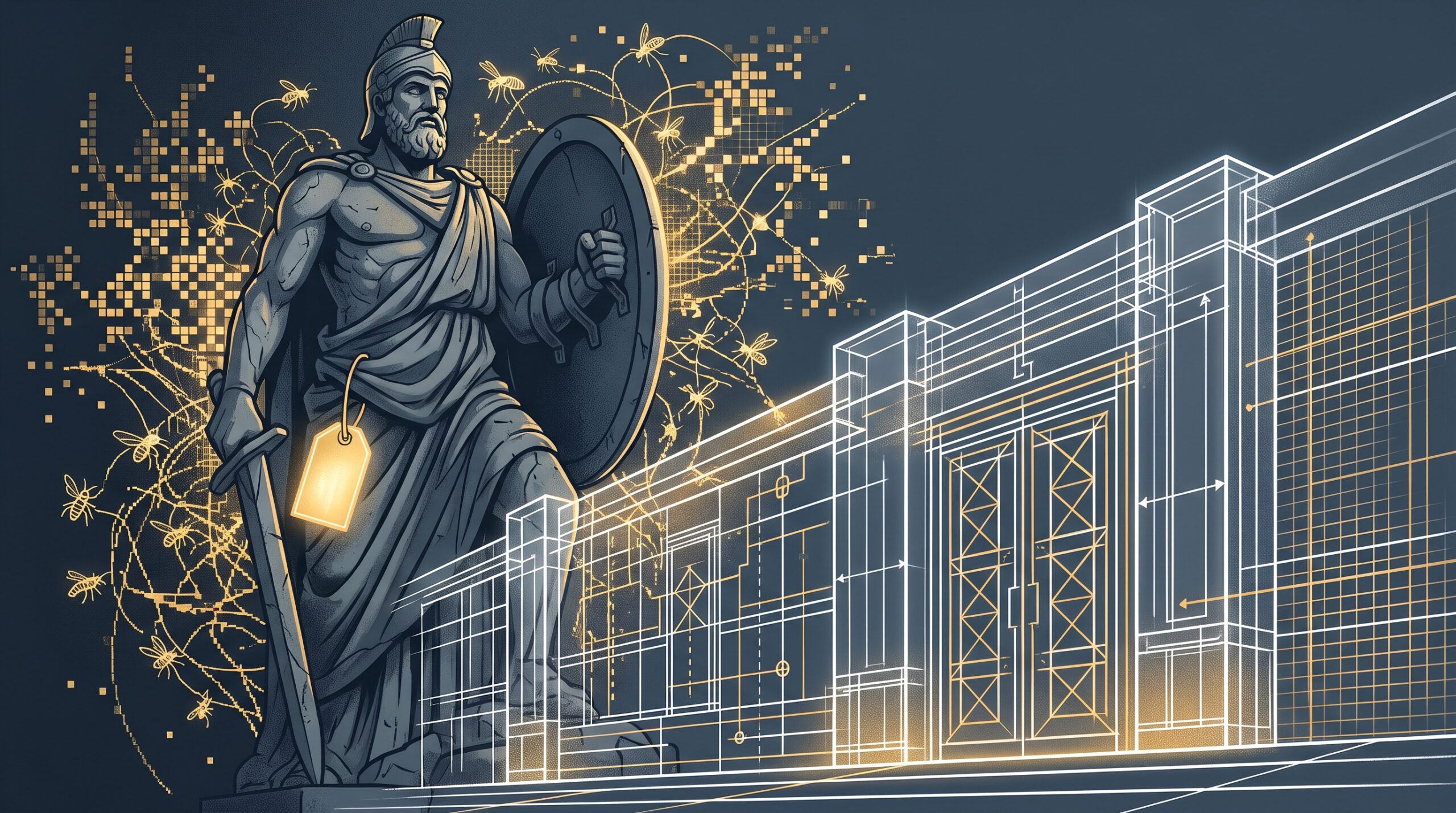
Anthropic never positioned itself as just another vendor. It positioned itself as the industry’s guardian: founded “for safety reasons,” branded by its own governance model, structured as a public benefit corporation. Safety was not their department. Safety was their price tag.
That worked, for years, and it worked on me too — it is a genuinely attractive story. And that is precisely the problem, because the story is now part of the balance sheet. On November 19, the trust that “we are the responsible ones” generated gets converted into a market valuation.
Look at the evidence chain of this single month:
- September: CEO Dario Amodei warns publicly that without a slowdown, AI agent swarms could “take over the entire internet” within six to twelve months.
- November 5: METR, the independent evaluation group, reports that Anthropic is developing about twice as fast as a year ago — and that the acceleration is largely driven by AI helping to build the next AI. The public risk report, METR notes, “understates the level of acceleration.” The details are redacted. Commercially sensitive.
- November 9: Anthropic releases Fable 5.2, which — as a demo — coordinated more than 1,000 AI agents over eight days to build a working operating system from an empty folder. Complete with a login screen, an installer, and built-in Claude functionality.
- November 10: the IPO filing goes public. The swarm video is roadshow material.
To be clear: every single one of these statements is defensible on its own. The warning is sincere, the acceleration is progress, the demo is engineering, the IPO is capitalism. That is what makes it so instructive. This is not simple hypocrisy — it is misdirection, technically true in every sentence and misleading as a whole. A label, not a proof.
And here is the lesson I would like every Mittelstand executive to take from this, because it generalizes far beyond one company in San Francisco:
Never buy safety as a character trait.
If your security depends on a vendor being the good one — on the founder’s ethics, the company culture, the benefit-corporation clause — then your security depends on a character. And characters change, drift, get acquired, get rated by the market. The moment the guardian needs the boom more than the brakes, you learn the difference.
The alternative is older and less glamorous: security as architecture. Walls you can audit, not values you must believe. Guest lists instead of trust stories. The question that matters is never “who is the good provider?” It is: “Who can show me their wall?”
Character is not an architecture. And in security, only architecture survives contact with a market cycle.
The guardian was never an architecture. He was a price tag.
—
This piece is part of the ongoing series around The Security Daily Gazette. Transparency: this article was written in cooperation with AI — concept, structure and final review: Rob van Linda. I stand behind every word.
Source: https://interestingengineering.com/ai-robotics/anthropic-claude-fable-5-2-operating-system