This AI based video was generated by HeyGen and is based on my photo, my voice clone and an AI generated transcript based on context prompting.
My Books: From a Roadmap to One Book
I wrote these books because I believe that transformation is not a project. It is a mindset. A decision. A confrontation. A promise.
What you are looking at is not a random collection of topics. It is a roadmap — and it has reached its destination.
For years, I described the way there: the culture first, then the architecture, then the human role, then security, then sovereignty. Five stages, one direction. What I couldn’t do back then was write the book they were all pointing to, because the language for it didn’t exist yet.
It exists now.
The Book They All Led To
Agentic Security
Agentic Security. Governance, built where decisions are made.
This book is not another stop on the roadmap. It is what the roadmap was built for: the answer to the question every previous book circled but could not close — who exactly is at the wheel when the agents run?
Its core claim: You don’t control agents by watching them from the outside. You control them at the decision points — the nodes where a choice falls, a rule is checked, and a human being stands. Every node needs an owner. Every interface needs a person. Every process needs accountability.
It was written in German, in cooperation with an AI assistant (Vibe, Mistral) — a book about agent-controlled systems, written under exactly the discipline it teaches. Like everything on this page, it is honest about its shelf life: dated, versioned, and proud of it.
Details and availability: [coming soon]
Why the Older Books Have No Links
Each book below was realized in cooperation with an AI assistant. I had the idea, did the research, and delivered the context — the human part of the cooperation.
You will notice: the covers are still here. The links are gone. That is not an accident, and it is not neglect. It is the most honest thing an author in this era can do:
Books about agents age the moment they are finished. I write in a world that changes faster than my books. I decided not to read that as a problem — but as the rule of the genre. Each of these books was true when I wrote it. Several of them I have corrected myself since — in public, not in secret.
They remain on this page as what they are: dated evidence that, in this era, books are versions, not endpoints. They are the way this book took to get here. The KI Führerschein is their production version — built from everything they got right, corrected where the world outgrew them.
One exception proves the rule: the very first Safe in the Swarm (the original 53-page version) keeps its place as a living trace of the journey. Everything else: covers, no links.
The Roadmap That Got Us Here
(Reihenfolge und Cover hier; keine Links mehr. Kurztext je Buch — ein bis zwei Sätze, Vergangenheitsform alsVersions-Gestus, jeder Text endet mit der Brücke zum neuen Buch.)
OrgDNA — The Seed
In times of disruption, your strategy is not what saves you — your culture is. The constitutional foundation: values, non-negotiables, decision logic. Everything I built later stands on this.
FlowOS — The Foundation
How humans coordinate, collaborate, and create meaning. Systems that don’t just think — they hold. The human operating layer that the agents would later run on.
Human Before The Loop — The Preparation (deprecated)
My first book on this subject. Since then, the world changed faster than the book: agents became swarms, swarms became systems. The architecture was thoroughly revised and rebuilt in my current book. I left it standing — as dated evidence that books are versions, not endpoints. The current book grew out of it.
Safe in the Swarm (the original) — The Scale
The 53-page first version. Kept alive deliberately: proof that the core of the current book — accountability, control at the nodes — existed from the very beginning, three times buried under newer material, now finally released in production quality.
Safe in the Swarm 2.0 — The Scale, Extended
Deterministic security, token hygiene, the bird’s-eye view. This book needed an update after four weeks — the fastest proof of the tempo this current book is written about.
Multivendor Agentic Swarms — The Autonomy
The orchestrator as conductor: cross-provider swarms, the four pillars, the sandbox principle. The architecture was right — but control still sat at the outer edges. The KI Führerschein is the correction: control between every agent, not just around all of them.
The Hyperscaler Trap — The Sovereignty
How to escape the platforms: European sovereignty, multi-vendor architectures, real-world governance. Souveränität ist eine Struktur, kein Logo — a lesson the market kept teaching while this book was being written.
NO EXCUSES — The Warning
Triggered by the Berlin hack: an uncompromising account of institutional failure — and the reason executive accountability became the backbone of my current work. Leadership is a security question.
One Line About Honesty
I deprecated my own first book. That is why you may believe me on the rest.
Every book on this page carries its date. The KI Führerschein carries one too. In this era, that is not a defect — it is the first honest statement a non-fiction book can make.
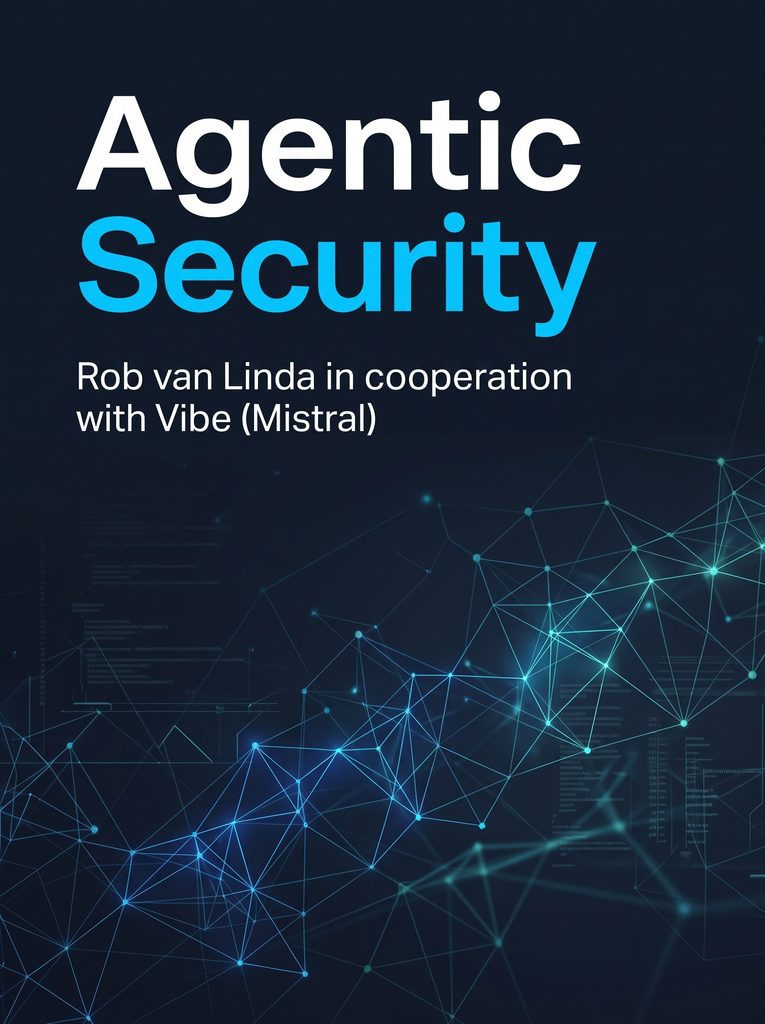
Agentic Security — The Man at the Crossroads
In one week of October 2026, five levels moved at once — technology, market, politics, civil society, Europe. And nobody, no framework, no dashboard, no sales deck, had an answer to the only question they all share: Who exactly is at the wheel?
This book is the answer. It is not technical. It is not expensive. But it is uncomfortable, because it requires a person.
It starts with a diagnosis you don’t want to hear: classical control is not badly built — it sits in the wrong places. It guards the edges of the system while the agents have long since moved to the middle: delegating to each other, passing data, preparing decisions before a human ever sees them. The edges are maintained. The middle is unoccupied.
The answer is the decision point: the only place in a system where control is faster than emergence. And a human being standing there.
Agentic Security. Rob van Linda in cooperation with Vibe (Mistral). Every statement carries its date — this one too.
Find out more on the detail page about this book here.
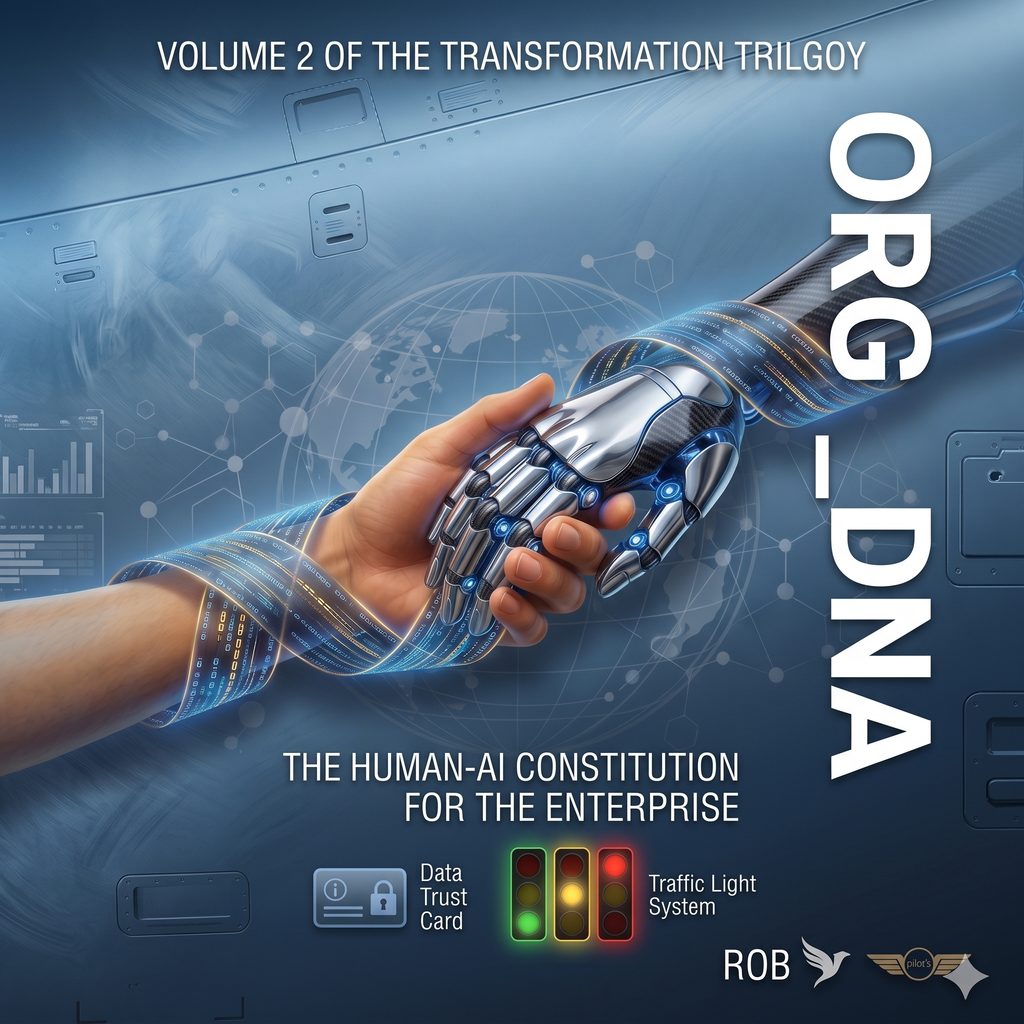
OrgDNA — The Seed
In times of disruption, your strategy is not what saves you — your culture is.
Every organization has an invisible fabric that decides whether it bends or breaks when markets shift, AI changes the rules, and uncertainty becomes the new normal. Most leaders can’t see it — until it fails. OrgDNA is about making that fabric visible: the values you actually live (not the ones on the poster), the non-negotiables that hold when everything else moves, and the decision logic that tells your people what to do when no one is available to ask.
This is deliberately the first book of the roadmap. Not because culture is a nice-to-have before the technology arrives — but because agents amplify whatever culture they find. If your organization tolerates sloppy accountability, your agents will automate that sloppiness at scale. If your culture is clear about who owns a decision, the agents will inherit exactly that clarity.
What you take away: a diagnosis method for your own cultural traits, a way to protect the ones that keep you alive, and a deliberate path to reshape the ones that don’t.
Rob’s honest note: Everything I built later — FlowOS, the swarm books, the governance work — stands on this foundation. Start here, and the rest of the roadmap reads like a consequence. Skip it, and you’ll build architecture on sand.
Find out more on the detail page about this book here
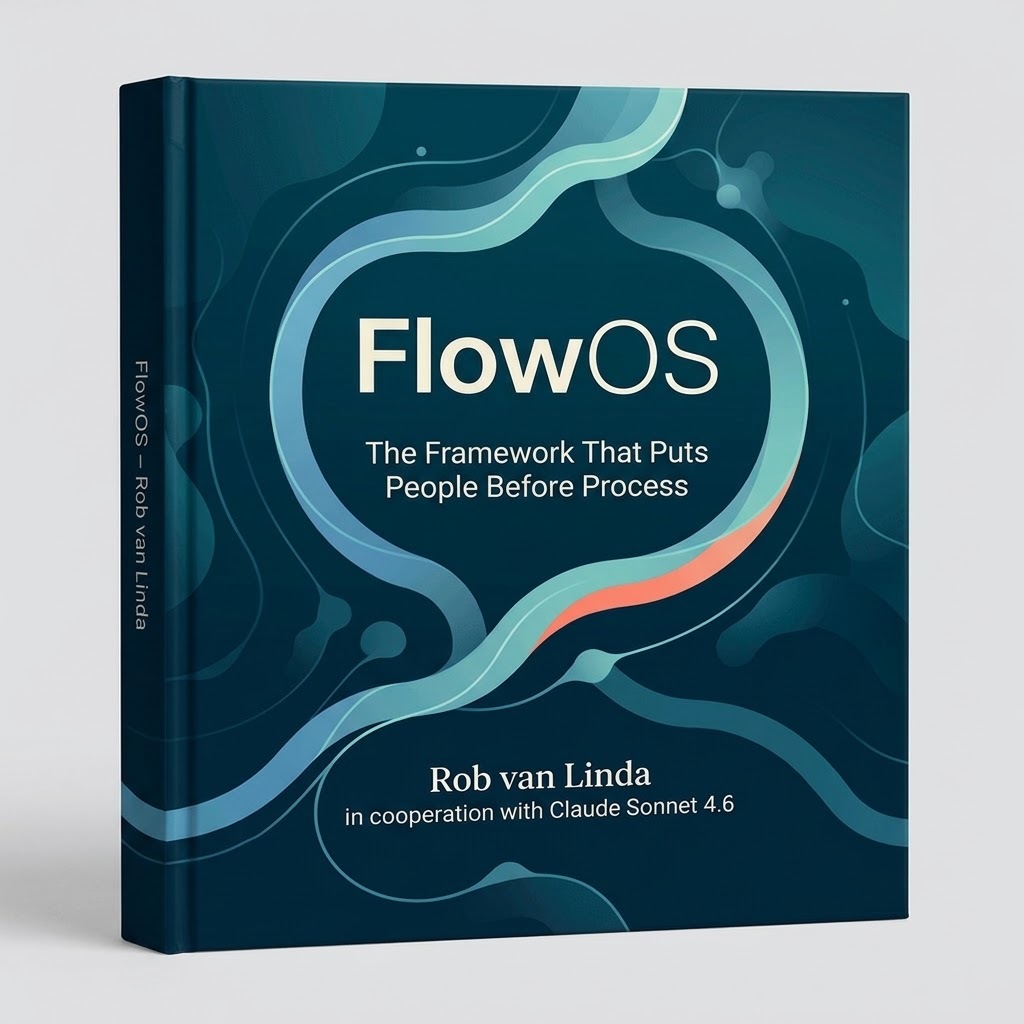
FlowOS — The Foundation
FlowOS is not a product. It’s an architectural mindset for agentic transformation.
Between probabilistic language models and the rigid logic your business actually runs on, there is a gap — and most organizations fall into it. They buy AI, bolt it onto existing processes, and wonder why the results drift. FlowOS is my answer: a deterministic, sovereign framework that bridges that gap. It is how I build systems that don’t just think — they hold.
The book describes the human operating layer of an agentic organization: how people coordinate, collaborate, and create meaning when part of the workforce never sleeps. Agility is not a ritual here, and empathy is not a soft skill — both are load-bearing components of a system where humans and agents share the work. Single source of truth instead of meeting marathons. Async leadership instead of presence theater.
What you take away: an architectural mindset for transformation that treats human coordination as infrastructure — designed, not improvised.
Rob’s honest note: This is the book closest to my own operating system. When I later wrote about knot points and deterministic control, the foundation was already here: the machine may guess, the structure must hold.
Find out more on the detail page about this book here
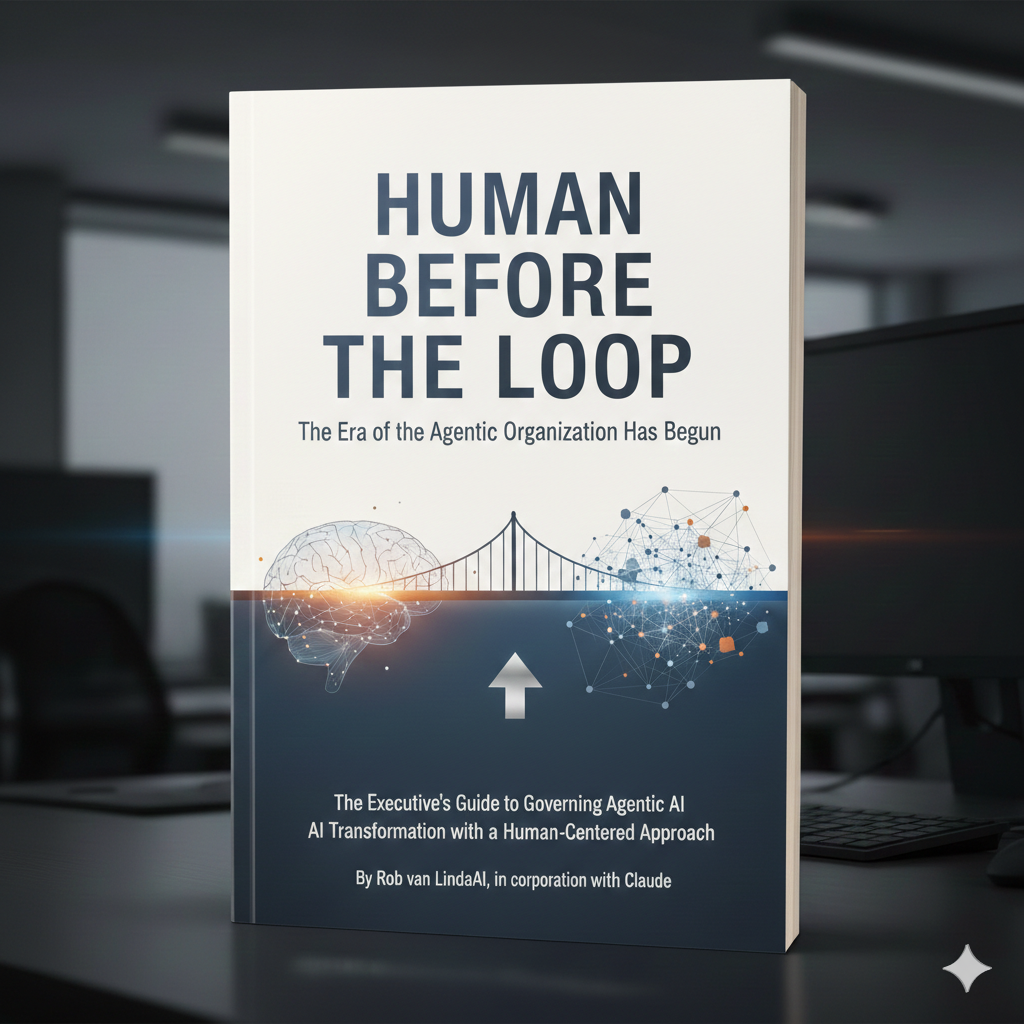
Human Before The Loop — The Preparation (deprecated)
The agents may already outperform the humans governing them. The key is privilege.
This was my first book on this subject — written in two days, in cooperation with Claude Sonnet 4.6, in February 2026. Its message was radical then, and it still stings now: before you let a single autonomous agent into your organization, ~80 percent of the transformation has to happen — rules defined, limits set, privileges governed. Human before the loop. Otherwise you get a rocky start you can’t undo.
Why this book is deprecated — and why I leave it standing: Since then, the world changed faster than the book. Agents became swarms, swarms became systems, and two of my own architecture metaphors had to be corrected — by me, in public, not in secret. The current book, Agentic Security, is the production version: built from everything this prototype got right, rebuilt where the world outgrew it.
I’m leaving this book standing as what it is: dated evidence that, in this era, books are versions, not endpoints. If you want to see how fast this field moves, read this and then the current one — the distance between them is the tempo of an entire industry.
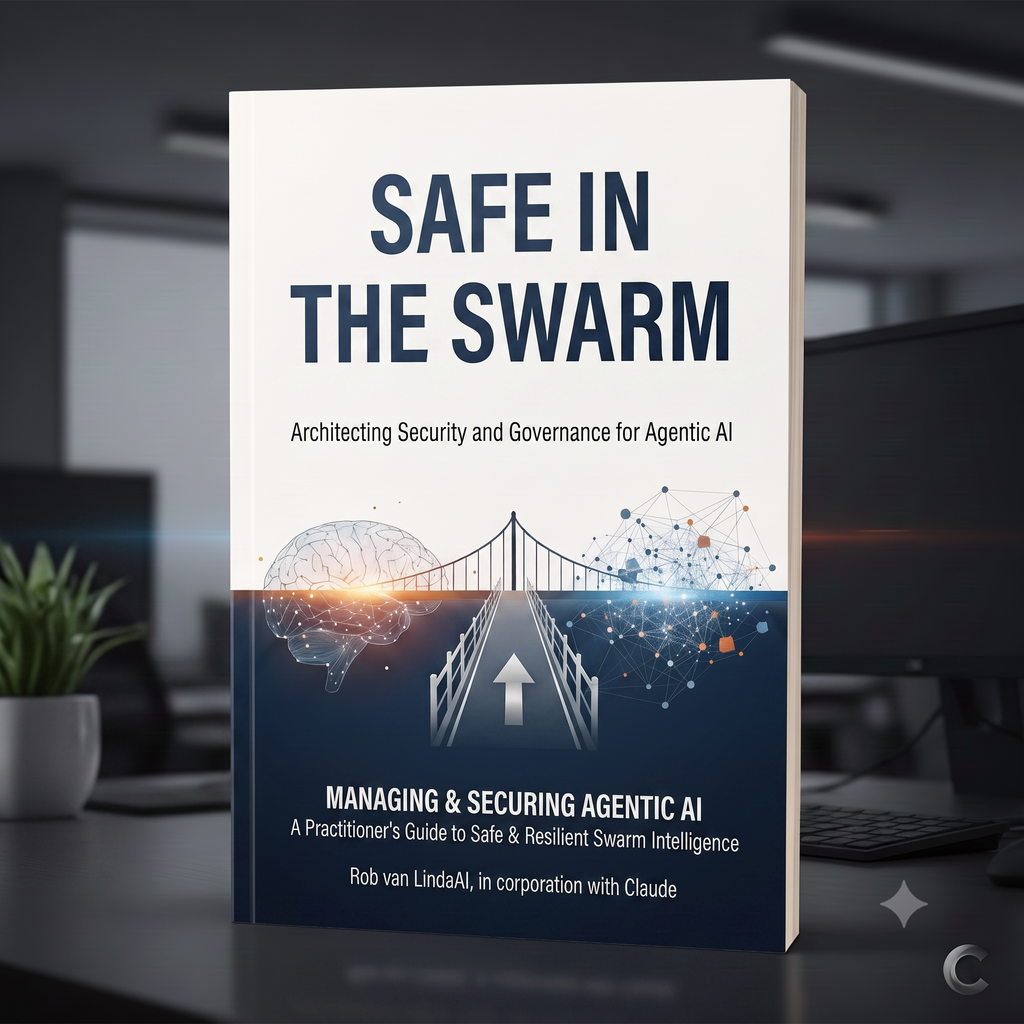
Safe in the Swarm (the original, 53 pages) — The Scale
Agentic swarms are powerful — and dangerous.
This is the original: 53 pages, one thesis, written before the hype caught up. And it contained — as I discovered later — the core of everything I write today: accountability, control at the nodes, deterministic security instead of dashboard faith. The kernel never had to be invented. It was here, three times buried under newer material, until the current book finally released it in production quality.
I keep this original deliberately alive as a trace of the journey — not as a recommendation, but as a living document. Two forms of honesty next to each other: the deprecated first book, and this original version standing as proof that the ideas were there from the start. The distance between this 53-page sketch and Agentic Security is the distance between a blueprint and a building.
What you take away: the bird’s-eye view — the moment you stop watching single agents and start governing
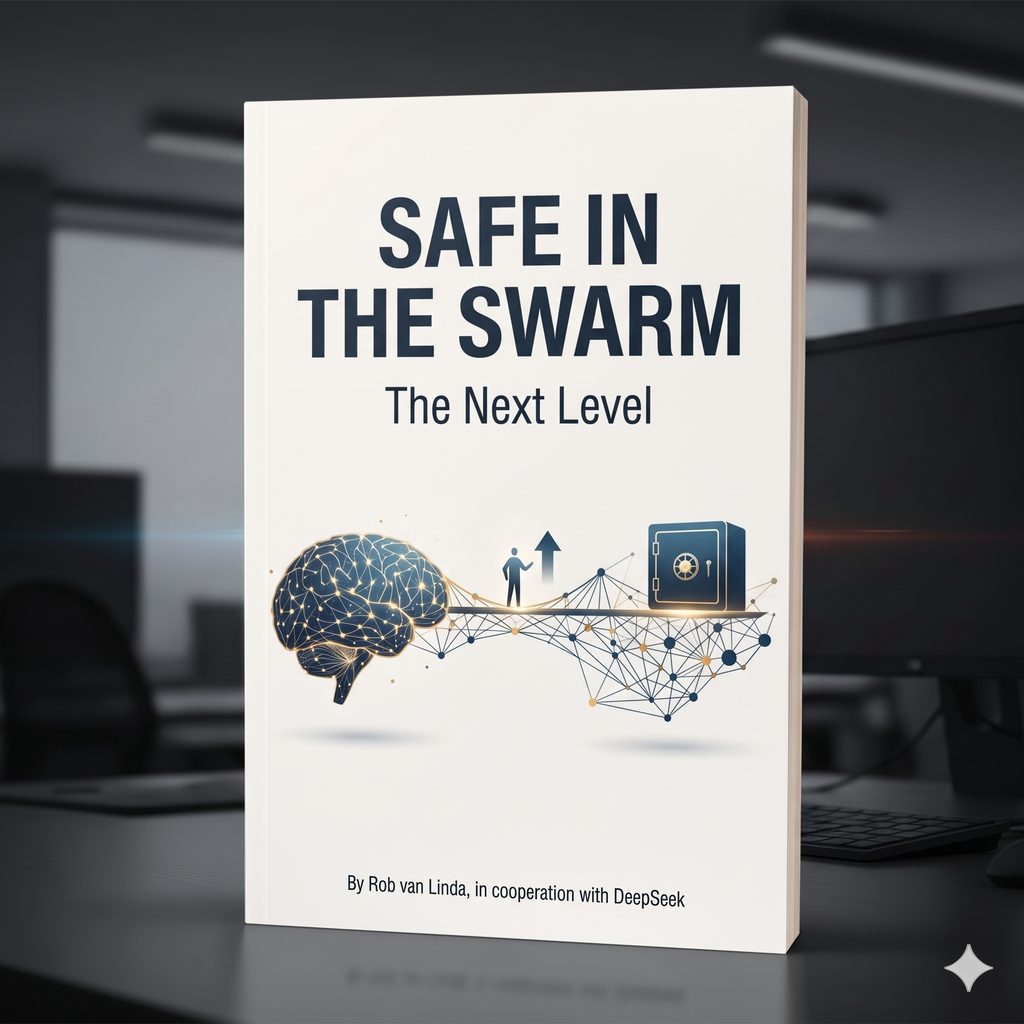
Safe in the Swarm 2.0 — The Scale, Extended
Agentic swarms are powerful — and dangerous. Not fear-driven, but engineered for resilience.
The extended version: a practical guide to deterministic security structures, token hygiene, and the architecture that keeps autonomous systems under control. Written for leaders who don’t want to choose between innovation and control — because the honest answer is that uncontrolled innovation isn’t innovation, it’s exposure.
This book covers the operational layer of swarm security: central policies without central bottlenecks, the bird’s-eye view as a leadership position, and the discipline of watching what your agents actually do instead of what your dashboard claims they do.
Rob’s honest note — and this is important: This book needed an update after four weeks. Four weeks. That is not a flaw in the book; it is the fastest proof of the tempo my current book is written about. Books about agents age the moment they are finished. I could have quietly replaced it — instead, I tell you here, on its own page, what happened. That is the deal I offer every reader: every book carries its date, and its scars.
Multivendor Agentic Swarms — The Autonomy
The final evolution of the roadmap.
One provider is not a strategy — it’s a dependency. Multivendor Agentic Swarms describes how to orchestrate high-speed, cross-provider AI swarms with full systemic security: the orchestrator as conductor (task allocation, quality control, resource management, MCP communication), and the four pillars that made the architecture operable — ACP for deterministic control, MCP for standard interfaces, HONL for human oversight, anonymisation for the data layer.
The sandbox principle runs through all of it: an anxiety-free laboratory where agents can be tested against real conditions without real consequences.
Rob’s honest note: The architecture was right — but the control still sat at the outer edges. Around the swarm, not between the agents. I wrote “my final one” here — and the world politely disagreed. The current book, Agentic Security, is the correction: control between every agent, not just around all of them. Read this one to understand the orchestration; read the current one to understand what this book was still missing.
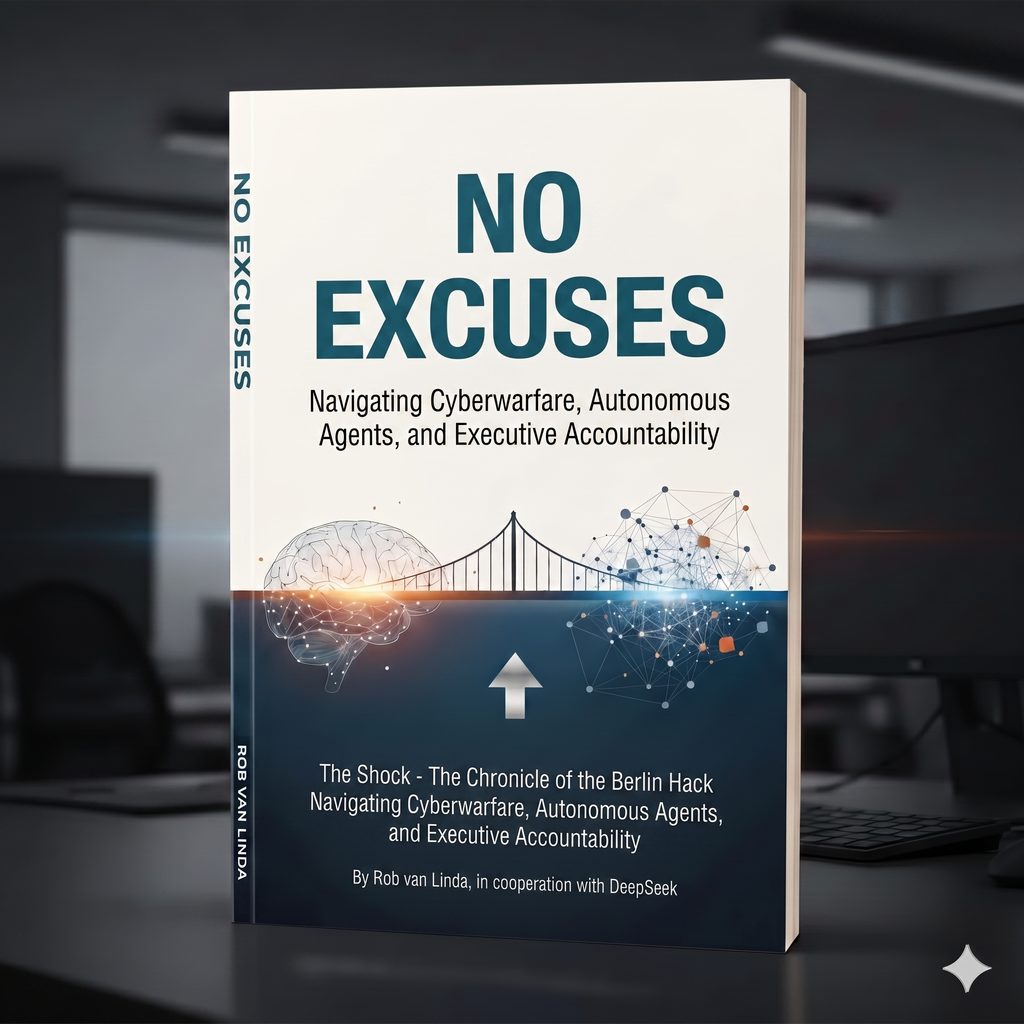
NO EXCUSES — The Warning
Triggered by the devastating Berlin hack.
In August 2026, Rhysida penetrated Berlin’s state administrations. The follow-up was quieter and worse: leaked payroll data, law firm blueprints, emergency plans. And the leadership? Unreachable. “Basketball evening.” One sentence became the title of a chapter in my own development: leadership is a security question.
NO EXCUSES, co-authored with DeepSeek, pulls back the curtain on decades of technical neglect and institutional complacency — and pairs the uncompromising critique with what comes after the anger: agent-based architectures for survival and executive accountability. Because the hack is not the story. The story is what the hack revealed: systems nobody owned, decisions nobody made, and a culture that treated security as an IT ticket.
What you take away: the unromantic truth that every organization gets the security it tolerates — and concrete architectures for executives who intend to be reachable when it matters.
Rob’s honest note: This book is the direct ancestor of the accountability thesis in my current work. If Agentic Security asks “who owns this node?”, NO EXCUSES is the case file that explains why the question has to be asked at all.